

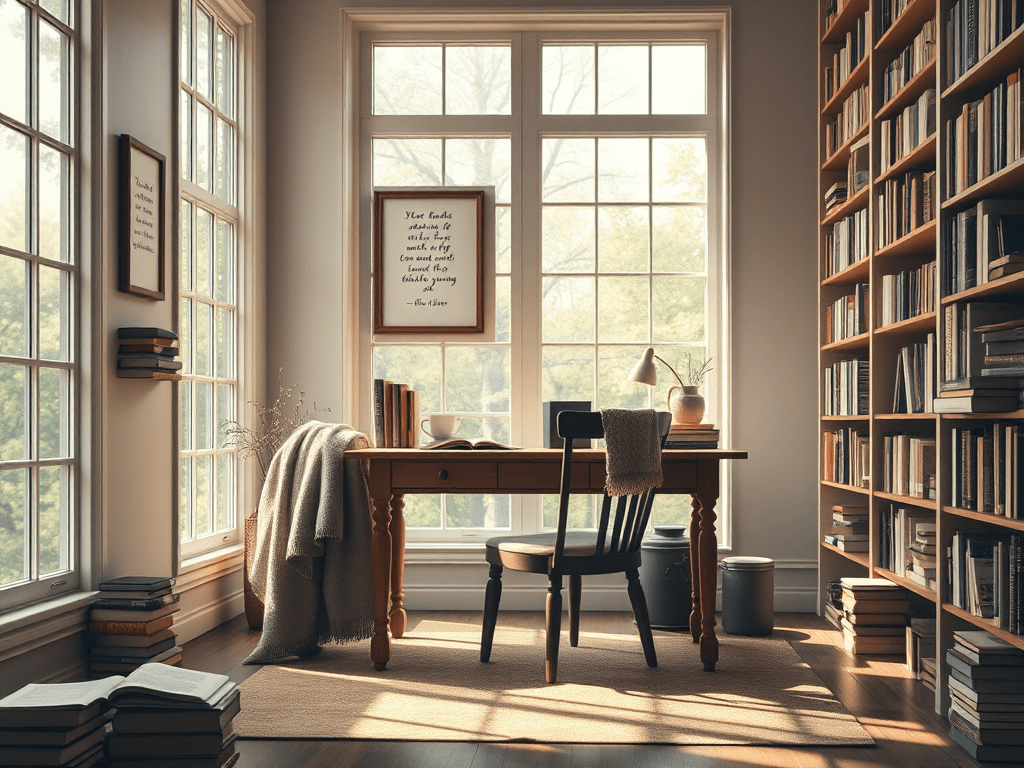


If I could build the perfect space for reading and writing, it wouldn’t be about luxury or size—it would be about atmosphere. It would be a place designed to slow time down, where distractions soften and thoughts have room to breathe. A space that gently invites you to sit, stay awhile, and let words do what they’re meant to do.
The room itself would be filled with natural light. Not harsh or blinding, but soft sunlight filtering through large windows, changing with the time of day. In the morning, the light would feel fresh and energizing. In the evening, it would fade into something warmer and calmer. Outside the windows, I imagine trees or mountains—something steady and quiet that reminds you the world is bigger than the page in front of you.
At the center of the room would be a solid wooden desk, worn just enough to show character. Nothing flashy—just sturdy, reliable, and familiar. The surface would hold only the essentials: a notebook, a pen that writes smoothly every time, and a laptop pushed slightly to the side. There’s space to spread out, but not enough clutter to steal focus.
Nearby, a deep, comfortable chair would wait for reading hours. The kind you sink into without losing posture. A small side table would hold a mug of coffee or tea, always within reach. A soft blanket would be draped over the armrest, not because it’s cold, but because comfort encourages stillness.
The walls would be lined with bookshelves—floor to ceiling, filled with novels, essays, journals, and dog-eared paperbacks that have been revisited more than once. Some books are there for inspiration, others for escape, and a few simply because they feel like old friends. Between the shelves, framed quotes and handwritten notes would serve as quiet reminders of why words matter.
Sound would be carefully considered. No television. No notifications. Just subtle background noise—maybe the hum of wind outside, distant rain, or soft instrumental music playing low enough to fade into the background. Silence would be welcome here, not uncomfortable.
This space wouldn’t demand productivity. It wouldn’t pressure creativity. Instead, it would offer permission—to think, to wander, to write badly before writing well. A place where unfinished ideas are allowed to exist without judgment.
In this perfect reading and writing space, progress wouldn’t be measured in word counts or chapters completed. It would be measured in moments of clarity, peace, and presence. Sometimes the best spaces don’t push you forward—they simply give you room to be exactly where you are.





 What If I...?