

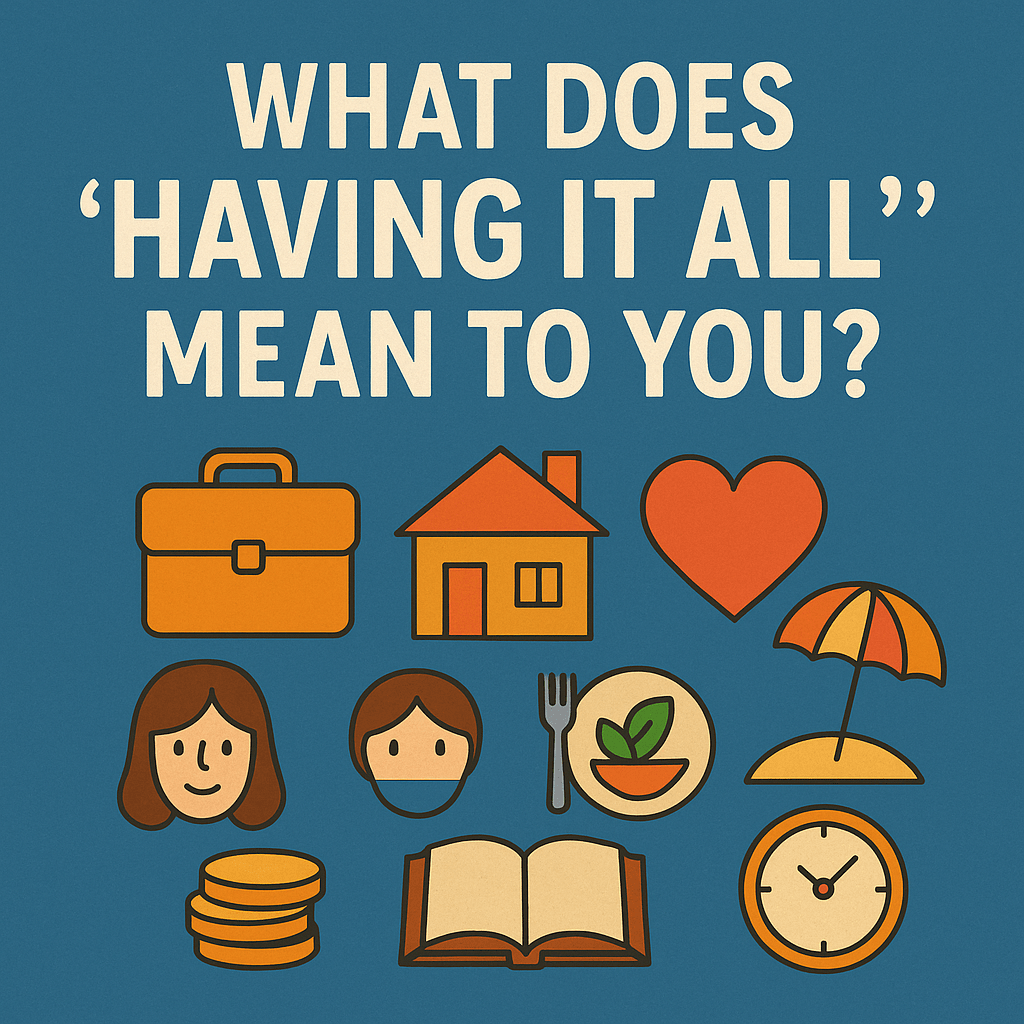
The phrase “having it all” is one that’s tossed around often — in magazine headlines, podcast episodes, motivational speeches, and even in our own self-reflective moments. It sounds like a golden ticket, a perfect recipe for happiness. But what does it really mean? And more importantly, is it truly attainable?
The Myth and the Dream
For a long time, “having it all” conjured up a vision of a perfect life: a thriving career, a beautiful home, a loving family, a healthy body, and a calendar full of exciting travels and meaningful social engagements. The idea is deeply appealing because it promises balance — that you don’t have to choose between being successful and being fulfilled.
But this version of “having it all” is often shaped by external influences: curated social media feeds, TV dramas, inspirational quotes. And while the vision might be captivating, it’s rarely rooted in the messy, nuanced reality of everyday life.

Reframing the Definition
What if “having it all” isn’t about having everything — but rather, having enough? Enough love, enough purpose, enough joy, and enough room to breathe. Maybe it’s about designing a life that aligns with your values, not someone else’s vision.
For one person, having it all might mean being a stay-at-home parent who’s deeply involved in their children’s lives. For another, it could be running a business they’re passionate about, even if that means working late nights and skipping vacations. For someone else, it might mean living simply in a quiet town with good coffee, books, and time to walk in the morning sun.
The Trade-Offs We Don’t Talk About
The truth is, we all make trade-offs. Time spent building a career might mean less time at home. Choosing flexibility might mean making less money. Prioritizing mental health might mean stepping away from opportunities. And that’s not failure — that’s life.
No one talks enough about the emotional cost of striving for the illusion of “everything.” Burnout, guilt, imposter syndrome, and chronic dissatisfaction often creep in when we hold ourselves to impossible standards. That’s why it’s so important to define success on your own terms.
Is It Attainable?
So, is having it all attainable? If you’re chasing the mainstream definition — maybe not. But if you redefine it, then yes — absolutely.
“Having it all” can be as simple as waking up and looking forward to your day. It could be about cultivating a few deep relationships instead of many surface-level ones. It could mean spending your time in ways that energize you, even if the result isn’t flashy or impressive.
Attaining your version of “having it all” is more about intention than acquisition. It means being mindful of what you’re working toward, being honest about what you’re willing to sacrifice, and being present for the joys you already have.

Final Thoughts
The most powerful shift you can make is realizing that “having it all” isn’t a fixed destination — it’s a personal journey. And it’s not about checking boxes; it’s about aligning your daily life with what truly matters to you.
So maybe the real question isn’t “Can I have it all?” but rather, “What does my version of all look like — and am I living it today?”






 What If I...?