




A thriving community doesn’t just happen on its own—it is built through the collective efforts of its members. Whether you live in a small town or a bustling city, there are always ways to improve the place you call home. Making a positive impact doesn’t require grand gestures; sometimes, small, consistent efforts lead to the biggest changes.
1. Foster a Sense of Belonging
One of the biggest factors that influence the strength of a community is how connected its residents feel. When people feel like they belong, they are more likely to engage, support one another, and work together to address challenges.
How to Improve It:
- Organize local events like block parties, farmer’s markets, or cultural festivals to bring people together.
- Support local businesses and encourage others to do the same.
- Get to know your neighbors—something as simple as a friendly greeting can strengthen community ties.
2. Improve Public Spaces
Well-maintained parks, clean streets, and accessible community centers make neighborhoods more inviting and enjoyable for everyone. Investing time and effort into these spaces can have a ripple effect, making people feel proud of where they live.
How to Improve It:
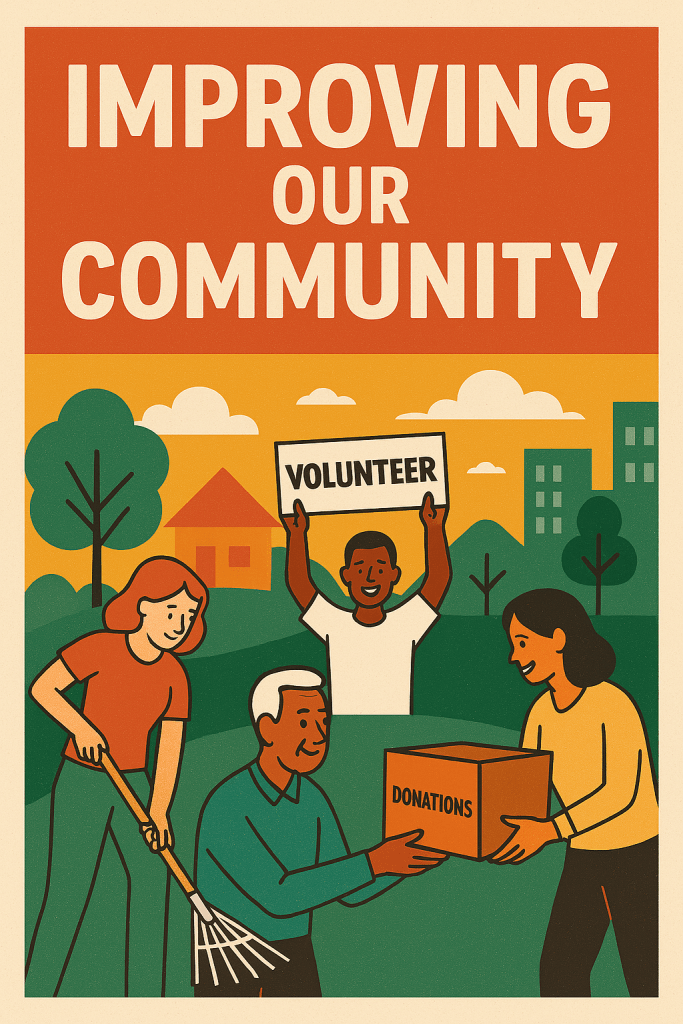
- Volunteer for community clean-up efforts.
- Advocate for better infrastructure, such as sidewalks, bike lanes, and playgrounds.
- Start a community garden where people can grow fresh produce and build friendships.
3. Encourage Volunteerism and Civic Engagement
The heart of a strong community is its people, and the best way to create positive change is by encouraging active participation. Every individual has unique skills and talents that can benefit others.
How to Improve It:
- Find local nonprofits or organizations that align with your passions and dedicate some time to their efforts.
- Encourage young people to get involved in civic engagement and leadership roles.
- Attend town hall meetings and have a voice in the decisions that affect your community.
4. Promote Education and Lifelong Learning
A well-educated community is an empowered one. Supporting education doesn’t just mean improving schools; it means creating opportunities for learning at all stages of life.
How to Improve It:
- Support local schools by donating books or supplies.
- Mentor young students or offer tutoring services.
- Advocate for free or low-cost educational workshops for adults, such as financial literacy or career development programs.
5. Address Social Issues and Promote Inclusivity
No community is perfect, and it’s important to recognize and address issues such as inequality, poverty, and discrimination. Creating an inclusive environment where everyone feels valued is crucial for long-term progress.
How to Improve It:
- Support organizations that help marginalized communities.
- Advocate for policies that promote fairness and equity.
- Listen to the concerns of others and stand against discrimination and injustice.
6. Strengthen Local Economy
A strong local economy provides jobs, keeps money circulating within the community, and leads to a higher quality of life for residents.
How to Improve It:
- Shop at small businesses instead of big corporations when possible.
- Promote local artisans, restaurants, and service providers.
- Encourage entrepreneurship by supporting business grants or mentorship programs.
7. Build a Culture of Kindness
At the core of every thriving community is a culture of kindness and compassion. Whether through random acts of kindness or ongoing efforts to support others, creating a positive environment benefits everyone.
How to Improve It:
- Offer to help an elderly neighbor with errands.
- Organize donation drives for shelters or food banks.
- Simply be kind—smile, listen, and treat people with respect.
Final Thoughts
Improving a community doesn’t require massive changes overnight. Small, intentional actions—when multiplied by many—can create a meaningful and lasting impact. Whether through volunteering, advocating for change, or simply showing kindness, each of us has the power to make our community a better place. The question is, what will your first step be?






 What If I...?